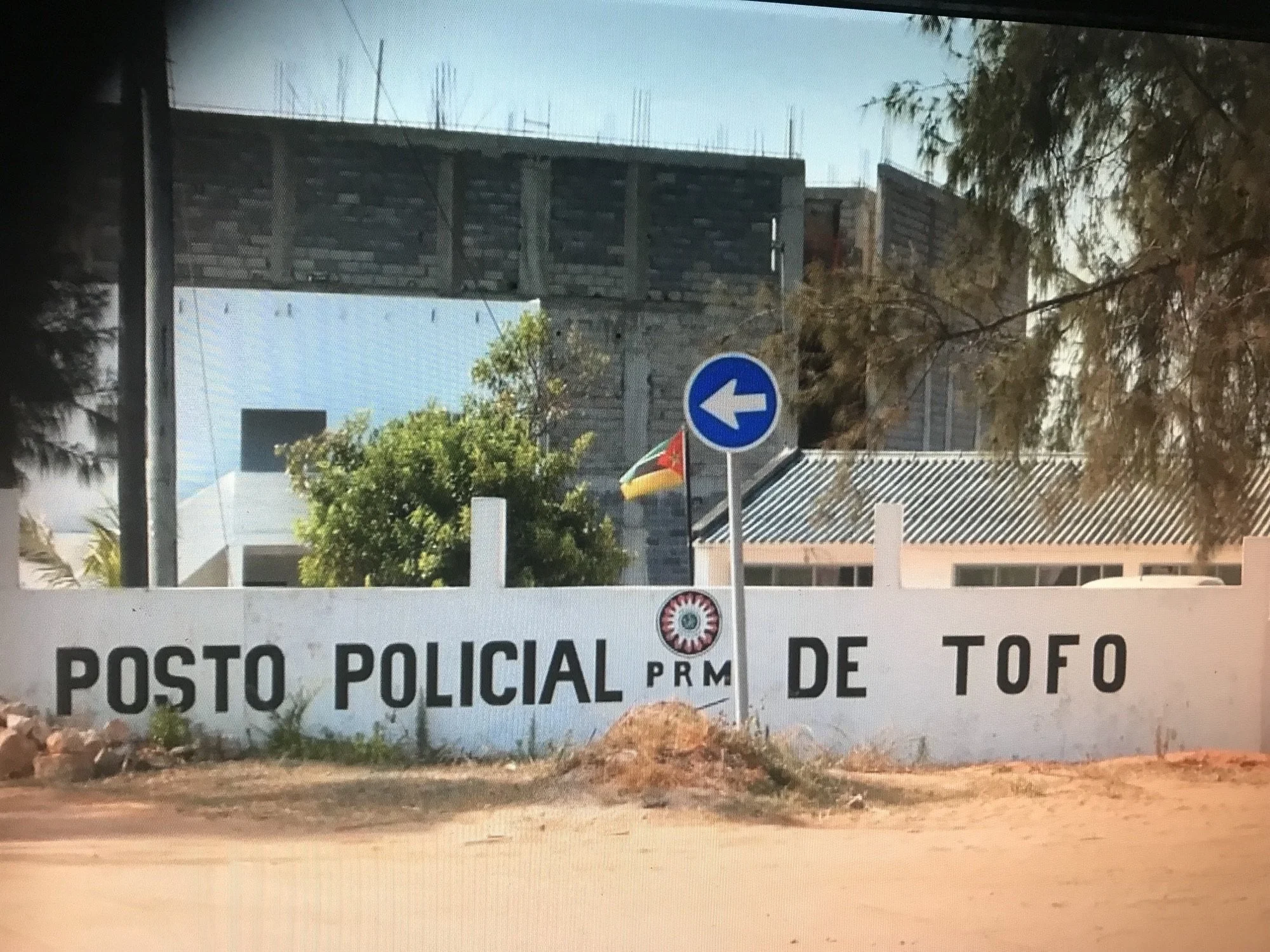
Evidence of Crime Scene Tampering: The Death of Elly Warren
On 9th November 2016, my daughter, Elly Rose Warren, was found dead in Tofo, Mozambique. From the very beginning, the circumstances surrounding her death raised serious concerns. My independent investigation has uncovered solid, undeniable evidence that the Mozambique police tampered with the crime scene, altering her body and replacing her clothing, in a way that obscured the truth about how she died.
The Crime Scene and Tampering
Two Mozambique police officers arrived at the crime scene at 5:30 am on 9th November 2016.
They changed the position of Elly’s body.
The weight of the facts points to Elly’s badly damaged black T-shirt being replaced with another top taken from her belongings.
The main Mozambique investigation team, including doctors, detectives, and Chief Inspector Jorge Miguel Cudzi, arrived later at around 9 am, unaware of this deception.
The AFP Action Sheet (Mr Scruton) confirms that at 6 am, Mozambique police attended the Pariango Backpackers hostel and collected Elly’s possessions. The hostel manager, Johan, later confirmed in a video recorded in October 2018:
“The police came knocking on my door at 6 am.”
This indicates that within 30 minutes of attending the crime scene, police had already travelled to Elly’s accommodation and collected her belongings.
Timeline of Events
8th November 2016 – Approximately 11:30 pm
A witness spoke with Elly late in the evening.
Testifying at the coronial inquest in August 2023, the witness confirmed Elly’s T-shirt was not damaged at this time:
“There was no damage to her T-shirt at that time. I would have noticed something like that.”
Confirms the damage occurred between 11:30 pm and the discovery of her body early the next morning.
9th November 2016 – Approximately 5:00 am
A fisherman discovered Elly’s body and took a photograph using his mobile phone.
The photograph clearly shows her black T-shirt ripped from the shoulder down the side, indicating a violent struggle.
This is the only known image of the crime scene taken before police began their official investigation.
9th November 2016, Approximately 5:30 am
Two Mozambique police officers attended the crime scene shortly after discovery.
They were the first authorities to arrive.
9th November 2016, Approximately 6:00 am
Mozambique police collected Elly’s possessions at the Pariango Backpackers hostel (AFP Action Sheet).
Confirmed (recorded) independently by hostel manager Johan:
“The police came knocking on my door at 6am.”
9th November 2016, Approximately 9:00 am
Main investigative team (doctors, detectives, Inspector Cudzi) arrived.
Evidence suggests they were unaware the crime scene had been altered before their arrival.
Missing Evidence
Trace evidence from the crime scene (beer bottle, Coca-Cola can, cigarette packet) is missing.
Elly’s clothes were never officially placed into evidence by Mozambique authorities.
Her clothes were later incinerated at Maputo Central Hospital because no one collected them, despite her death being classified as a violent homicide.
The AFP had the opportunity to retrieve Elly’s clothing but did not. AFP and DFAT officials stopped over in Maputo to change flights while travelling to Inhambane Airport for Tofo, and again on their return to Johannesburg on the 17th and 18th of November 2016. This was approximately three days after Elly’s Mozambique autopsy was conducted in Maputo, at which time the clothing she had been wearing was available and waiting to be collected at this very early stage of the investigation at the Maputo central hospital. the director of the hospital told the family the clothes are kept for a while so family or in this case with a susphious death the Authorities!!!
Contradictions in Official Reports; Clear Crime Scene Photograph
The official records surrounding the death of Elly Rose Warren contain a series of significant contradictions and omissions across multiple authorities, including the Mozambique police, the Australian Federal Police, and the Victorian Coroner. These inconsistencies relate to critical physical evidence from the crime scene and raise serious questions about how key information was handled.
Mozambique police reports prepared by Servico Nacional de Investigation Criminal (SERNIC) in 2017 and again in 2020 state that there were no signs of a struggle. Neither report mentions a “CLEAR” crime scene photograph showing Elly’s T-shirt ripped apart, exposing her body. This omission is significant, as the photograph forms part of the original crime scene evidence and directly contradicts the narrative that no violence occurred.
In submissions made by the Australian Federal Police to the Victorian Coroner, it was asserted that no police authority had formally stated that Ms Warren’s death was a crime prior to 2023. This claim became central to the AFP’s position and was used to justify the decision not to send a Mutual Assistance Request (MAR) to Mozambique seeking formal investigative cooperation. As a result, no MAR was sent at the time of Elly’s death, and none has been sent to this day.
At the same time, the AFP failed to disclose to the Elly’s family or to the coroner in 2016 that a clear photograph existed showing Elly’s ripped apart top, leaving her body exposed. This image, which represents crucial physical evidence from the scene, was therefore withheld during the early stages of the investigation.
The AFP also did not inform the family, or seek their permission, before sending the clear photograph of Elly’s naked body to Mozambique police authorities. The transmission of such sensitive material occurred without the knowledge or consent of Elly’s family.
In the official statement provided to the coroner, the AFP Senior Liaison Officer failed to disclose that a “CLEAR” crime scene photograph existed showing Elly’s T-shirt ripped apart, or that this image had already been sent to a Mozambique chief inspector in 2016. “This omission occurred despite the AFP & AFP/SLO having prior knowledge of the clear photograph in November 2016”. Despite the significance of this evidence, no formal investigative report by the Australian Federal Police analysing the clear image has ever been produced or presented to the Coroners Court of Victoria. Instead, only a “BLURRED” version of the photograph was submitted as part of the official statement to the coroner.
The omissions extend to the original examination of Elly’s body. The doctor and police inspector who examined Elly removed all of her clothing and also removed money hidden under her bra. Despite this direct examination, neither reported that her T-shirt had been ripped apart, a detail that would normally be considered critical physical evidence.
In the findings delivered by John Cain of the Coroners Court of Victoria, the ripped T-shirt is mentioned within the body of the findings. However, the issue was not addressed in the coroner’s final conclusions. As a result, this key piece of physical evidence was effectively left unresolved in the final determination regarding the circumstances of Elly’s death.
Taken together, these contradictions and omissions raise serious concerns about the integrity of the official record. Across multiple authorities from investigators at Servico Nacional de Investigation Criminal to submissions by the Australian Federal Police and the findings of the Coroners Court of Victoria critical evidence was either not recorded, not disclosed, or not addressed in the final conclusions. The clear crime scene photograph showing Elly’s T-shirt ripped apart, the failure to document this damage during the examination of her body, and the omission of this evidence from key official statements collectively undermine the reliability of the official record. Evidence that directly bears on whether violence occurred was either not recorded or not addressed, leaving a version of events that appears incomplete and potentially misleading in assessing whether Elly’s death involved criminal conduct.
Witness testimony confirms:
Elly’s T-shirt was intact at 11:30 pm on 8th November 2016.
The top was ripped apart between 11:30 pm and 5 am, when the fisherman took the photo.
AFP and Cover-Up
AFP had knowledge of the clear crime scene photo in November 2016.
They did not report on this vital evidence therefore the ripped apart top was never disclosed to the Coroner or family in 2016/17 by the AFP Solely responsible for these serious matters overseas.
Meetings on 18th November 2016 with Dr Delgado and Inspector Cudzi failed to mention the ripped top. (AFP action sheet)
The AFP were informed Elly’s body was moved Post-mortem at these meetings!!
Suggests that Mozambique tampering was concealed or ignored, and AFP did not act to correct the record.
Forensic and Medical Evidence
Radiology evidence revealed extremely high-density material in both lungs, consistent with large amounts of sand. Measurements recorded 1290 HU and 947 Hounsfield Units, values comparable to cement and bone density, indicating that both lungs were filled with dense particulate material.
Dr Klepp, the South African pathologist, stated that the airways were “chockablock with sand.” She also confirmed that when she examined Elly’s body one week later, the oral cavity was packed with sand, consistent with the observation of a witness at the crime scene that morning who reported seeing Elly’s mouth packed with sand.
The Mozambique autopsy also documented an abundance of sand in Elly’s airways and concluded that her death was violent and consistent with homicide.
In contrast, the later examination by the VIFM Melbourne pathologist did not detect sand, creating a serious contradiction between the radiology findings, the Mozambique autopsy, and the South African examination, and raising significant questions about the accuracy and completeness of the later autopsy assessment.
Further concerns arise from the mishandling and loss of critical forensic evidence, including the sand sample, a tampon, and the destroyed clothing. The loss of this evidence has severely compromised the ability to properly examine the circumstances surrounding Elly’s death and has undermined the integrity of the investigation, denying the family the justice they deserve.
Re-enactment Photos
To help the public understand the crime scene:
Model reenactments replicate the body position and ripped apart T-shirt as captured by the fisherman.
These photos demonstrate the severity of the damage, highlighting why this evidence was critical.
Conclusion: Truth and Accountability
The facts are clear:
Mozambique local police tampered with the crime scene, including changing the body’s position and replacing the ripped T-shirt in the early hours before the main Mozambique investigation team and doctor turned up at 9am.
Critical evidence was removed or destroyed, including clothing and trace evidence.
AFP had knowledge of the fisherman’s clear photo in November 2016 but did not inform or report on this critical evidence to the Coroner or family.
Official reports contradicted eyewitness testimony and photographic evidence.
Critical forensic evidence was lost, obstructing justice.
One of the most significant barriers faced by families at an inquest is the exclusion of relevant witnesses. When relevant witnesses are not permitted to give evidence, the family's ability to present its case before the Coroner is effectively hamstrung. This prevents critical evidence from being examined, limits the testing of disputed facts, and may ultimately affect the Coroner's ability to make fully informed findings.
Families should have a fair opportunity to call relevant witnesses whose evidence may assist the Coroner in determining the circumstances of the death. Decisions to exclude such witnesses should be made only where there are compelling legal reasons, with careful consideration of the impact on the family's ability to participate effectively in the inquest.
This is not a minor administrative error. The handling of Elly's death demonstrates systematic failures, the concealment of critical evidence, and investigative shortcomings that prevented a proper understanding of the crime.
The cumulative effect of these failures is profound. They undermined confidence in the investigation, denied the family access to critical evidence, and impeded the Coroner's ability to examine all relevant facts. Accountability requires more than acknowledging these shortcomings and requires systemic reform to ensure that no other Australian family faces the same obstacles in the search for truth and justice.
Elly Rose Warren deserves nothing less than full transparency, accountability, and justice.
Appendix: Re-enactment of the Crime Scene T-Shirt Damage
The following photos are reenactments of the crime scene photo taken at 5 am on 9th November 2016.
Imagine yourself as the detective walking onto the crime scene at 9 am:
Would you not notice the ripped T-shirt?
Would you not preserve this as evidence?
Would you not report the t-shirt ripped apart and struggle?
Would you not report the state of the body half naked airways full of sand and top totally destroyed?
The T-shirt was completely ripped from shoulder all the way down Elly’s side, held only at the bottom by the reinforced waist lining.
These reenactments provide a clear visual understanding of the original crime scene, which was never properly recorded by all authorities.
Photo 1: Model lying to replicate Elly’s position.
Photo 2: Model standing to show the T-shirt hanging after damage. I asked the model to stand up from the laying down position.
These photos show the state of the T-shirt at the crime scene and underscore the importance of this evidence, which was ignored or destroyed.
A retired Melbourne homicide detective has reviewed these reenactment photos and stated that, while it is impossible to recreate the scene exactly, this version of the damage to the top and body position is a close reenactment of the original crime scene photograph, which reflects the truth of the circumstances. Mr Bezzina states:
“The Clear Photo Tells the Truth.”

